Monday, 27 April 2009

Poster for Lost in Love & War


Our main influence for our poster came from the Atonement poster. We wanted to show the contrast between the two locations - war and home. Although we still wanted the harshness of both environments to be portrayed that's why we chose to keep both pictures in black and white to signify the struggle of the woman as well as the man.

Overall analysis of Lost in Love & War

Our film begins with our production company logo. The logo doesn't exactly fit with our genre of war romance but if our production company did produce it would produce films of all genres similar to Working Title instead of Merchant Ivory who only produced Costume dramas.

The logo then fades into "spotlight productions presents" and then the title "Lost in Love & War." The slow transition signifies the genre of romance and the possible style of music. The font also provides anchorage that the genre is romance.

The film begins with an establishing panning shot of the garden. This gives anchorage to the peaceful location although the writing on the shot "June 1944, London" contradicts the peaceful location as the prior knowledge of the viewer informs them that it is the time of world war II and the city location of London which is stereotypically a hectic location.

The high angle shot of the woman signifies her vulnerability and her reading gives anchorage of her innocence. It also helps to make the situation to be natural and nothing out of the norm. The medium shot of the woman standing with a look of shock and walking out of the shot creates a narrative enigma for the audience - what has she seen? Th woman dropping the book also gives anchorage that something has changed in the circumstances and may never be the same again.

The shot of the army officer signifies a now formal environment, the man is also holding a letter which from prior knowledge the audience may establish the situation. The over the shoulder shot shows the army badge which again gives anchorage to his position in the film.

The close up of the letter being handed over signifies that there is an exchange of important information and the over the shoulder shot shows the seriousness of what the woman is expecting the letter to say.

The slow pace of the non diegetic music and the slow pace of her walking gives anchorage that the woman is distressed by what news she is expecting. The shot of her sat on the step starring at the letter signifies her want to avoid what news is the follow, the wind blowing her hair also gives a feel of eeriness. 

The wedding photograph gives anchorage to the viewer that the news may be about her husband. How she strokes the photograph also signifies that she has fond memories of that day and remembering these memories gives her the courage to face the truth the letter may bring.

The woman opens the letter quite quickly this signifies that she cannot stand the suspense and that she still feels some hope of positive news. The low angle shot of her reading the letter signifies that she is the only person who is control of her future without her husband. 

The close up of the letter and the non diegetic voice gives solid anchorage to the news the woman has just received. The "missing presumed dead" extract signifies that there could be a twist in the story.   

The extreme close up of the woman's face shows her true emotions although she still seems to control her emotions. This signifies that she is a mentally strong character. The way she composes herself and walks away from the situation also gives anchorage to this.

Storyboard


Monday, 20 April 2009

Final piece - class feedback

Strengths

  • Strong mise-en-scene and costume - army uniform badge shown in over the shoulder shot which provides anchorage
  • Strong framing - eg woman standing up and her head still being in shot
  • Slow pace music fits well with slow pace editing
  • Mise-en-scene of trees and greenery fits well with the style of melancholy non diagetic music
  • Affective signifier of emotion when the woman strokes the photograph
  • Well chosen shot variety
  • Black and white tittles appropriate for genre of film

Areas that could be improved...and how...

  • The first panning shot - stop panning and move to high angle shot when the camera reaches the woman
  • Camera shakes when filming the envelope - potentially re-shoot
  • Tone down the voice over, also there is background noise
  • Maybe include extracts of voice over throughout the clip, with an elderly woman looking back

Thursday, 2 April 2009

Lost in Love & War - Transcript

Media, Lost in Love & War, Transcript height="500" width="100%" rel="media:document" resource="http://d.scribd.com/ScribdViewer.swf?document_id=13892896&access_key=key-195f685fhio4d5avy2cp&page=1&version=1&viewMode=" xmlns:media="http://search.yahoo.com/searchmonkey/media/" xmlns:dc="http://purl.org/dc/terms/" > value="http://d.scribd.com/ScribdViewer.swf?document_id=13892896&access_key=key-195f685fhio4d5avy2cp&page=1&version=1&viewMode=">     Media, Lost in Love & War, Transcript lorna_kennedy1406
   Publish at Scribd or explore others:        

Wednesday, 1 April 2009

Evaluation:Looking back on you preliminary task, what do you feel you have learnt in the progression from it to the full product?

I have learnt a lot producing my project. One main factor I have learnt is the importance of planning efficiently. For the pre-lim task we began filming with not much planning, we then discovered our first idea wouldn't work so had to come up with another plan. This cost us time although we realised we couldn't afford to make this mistake with our final film. I also found it is important to schedule time to re-shoot shots that don' fit in with the overall feel of the film's genre.

With our film we needed to take great care with mise-en-scene and costume where as in the pre-lim task it wasn't that important. With Lost in Love & War being set in the 1940's wee needed to ensure the costume of the woman and the army uniform was correct. We did this by doing extensive research and studying films also set in this time such as Atonement and The War Bride. The mise-en-scen was also vital as we had to ensure that it had nothing that signified today's era. This made finding a location even harder. We also had to choose carefully where abouts we filmed in our location to make sure we avoided modern day objects such as a trampoline and an alarm box on the house.

In the pre-lim task I jumped the shot so that the main protagonist was in the corridor before the viewer saw her walk out of the door. This made me realise how important it is not to jump shots. So for example we had to ensure hat the main protagonist in Lost in Love & War didn't move positions without smooth transition which the audience would understand.

I also realised the importance of appealing to your target audience and the aim to appeal to other audiences to keep the market open. An example of this is that originally we chose to have the setting of our film in Leeds. But then after looking at settings of other similar films such as Atonement we realised that they were filmed in London. This is a stereotypical location that worldwide audiences would recognise so if our film were to go global our market wouldn't be limited. We also incorporated a young protagonist to attract the younger audience and the theme of war to attract the male audience.

Evaluation:What have you learnt about technologies from the process of constructing this product?

Our first use of technology came when filming our first two minutes. This involved working the cam-corder and getting the best results from it. From experience we decided not to use the zoom on the cam-corder as it was not clear enough so therefore we moved the camera closer to the object in question.

We also found it more affective to use the tri-pod than hold the cam-corder by hand. Using the cam-corder by hand caused some of our shots to be shaky meaning we had to re-shoot some. One problem with our final piece is that when there is the low angle looking up at the woman the shot is shaky this is due to us filming it without the tri-pod. It was not viable to use the tri-pod for this shot though as it was the angle was too low.

We used imovie to edit our film. For our establishing shots we used fading so the transition was smoother, one problem we had to address with this is that the shot transition did jump but we managed to resolve this issue. We also imported sound effectively and with ease to our film. One feature that would have been useful on imovie would be a sepia affect instead of just colour or black and white.

Evaluation:How did you attract/address your audience?

We have used a variety of different factors to attract our target audience. At first glance our film appeals to a female, more mature audience. We wanted to address this by attracting the male audience and a younger audience.

To attract the male audience we incorporated the theme of war and planned on adding scenes of war in our film. Films such as Atonement and the War Bride also used this. Having a female protagonist in her early twenties may also attract a male audience along with a younger audience. A majority of films set in the time of the war such as The Notebook have used young protagonists again to attract a younger market.

To attract our main target audience - 15+ females we catered to their desires within a film. Our film looks at the females point of view of the war and how it affects her. This portrays the woman in a dominant role which is not always the case in films set in this time. The non diegetic music is of a classical form and therefore attracts a more mature audience. The theme of love and romance stereotypically attracts all females to films so therefore this is our main theme.

The time our film is set may also attract the small population of people who were around then as it may be a reminiscent film for them.

Evaluation:Who would the audience be for your media product and how we attracted them?

Our target audience is age 15+ due to our BBFC rating of 15. Although our film would probably be better suited for a mature audience with it being a war romance. The gender target audience is women but the theme of war may attract the male audience as-well. Our main protagonist is in her early twenties. We did this hoping it may attract a younger audience and may also attract the male audience. The classical non-diegetic music links to culture which is what our target audience interest may be. These links would probably attract a middle to upper class audience.  

Evaluation:What kind of media institution might distribute your media product and why?

If our film were to be produced it would be big budget due to the need to concentrate on mise-en-scene, location and costume. Also the flash backs of the husband at war may need special affects to create the correct portrayal. 

Our film is probably most like Atonement which was also set in World War II due to this they would attract similar audiences so would therefore use similar distributers. Atonement used Universal Pictures for their main distributer this is due to Working Title, who produced Atonement being part of Universal Pictures. This link to Universal Pictures is vital for Working Title and their distribution, although using Universal Pictures for our distribution may not be viable due to Spotlighted productions having no specific link to them.

Another film that is set in the past, similar to ours is The Duchess. Distributors such as BBC Films and Pathe were involved in the production then the distribution, this would be a more viable option for our film. For the USA distribution The Duchess used Paramount Home Entertainment, this would be a possible way we could distribute to the American audience. Using Paramount Home Entertainment would also give us the option to distribute in the new media of Blu-ray.

Evaluation:How does your media product represent particular social groups?

We have tried to keep away from using the common codes of stereotypical characteristics of classes as we thought this might limit our audience. Although the class of the woman in the film would probably be middle/upper class. This is represented through the location: a well proportioned garden with a big double fronted victorian house. This is similar to how Atonement portrayed their social classes. The main protagonist's  hair is done quite professionally along with her dress which signifies upper class and her make-up is also done to a high standard. 

During the war social class barriers became a lot more blurred due to the change in ways of living. This made it easier for us to avoid specific labeling of classes. The barriers were especially blurred in the army. All the men looked similar and wore the same clothing meaning there were no signifiers of class except for language codes which are not portrayed in our clip meaning it is impossible to determine the man's class position.

Evaluation: In what way does your media product use, develop or challenge forms and conventions of real media products?

Our media product does follow some form and conventions of the genre of war romance. Our film follows the relationship between a man and woman and also the stereotypical role of the man being at war. One difference our film has in this is that the film follows the point of view of the woman which is quite controversial as women were seen as less independent.

Our film also portrays what seems to be a middle class woman as being well presented and well kept. One difference with our film is that the mise-en-scene appears tired as it has not been kept appropriately. This is a signifier that the class boundaries are beginning to become blurred which is anchorage to reality. The theme of reality isn't addressed often in other films set in the 1940's, an example of this is Atonement.

Genre Research & Intertextual Links: The Titanic


The Titanic starts with an elderly woman telling her story of her voyage on the Titanic and the love she found there. This is similar to our film where the woman is looking back on her life with her true love.

Genre Research & Intertextual Links: The War Bride


The War Bride is about a woman who marries a Canadian Soldier and then he goes to war. She has his baby then has to go and live with his family. Like this our film looks at the affects of the woman left behind and the effects when the man returns from war.

Genre Research & Intertextual Links: The Notebook


The film starts with an elderly man reading a love story from a notebook to a fellow female patient. It then goes to flashbacks of a relationship between a man and a woman. Our film follows the same themes of having love, loosing it then discovering it again.

Feedback

We showed our opening of Lost in Love & War to some people categorised under our target audience.

That it looks 1940's but there are too many shots of the letter towards the end.
  • The setting was really good, as were the costumes.
  • Setting and costumes were excellent and the actress had a good 1940's face.
  • The shots from frame to frame were nice and smooth with no jerky camera work.
  • Liked the camera work and also the use of objects to tell the story and how we didn't need Dialogue and also the music is very effective.
  • The sounds of the leaves are effective

We also put our film on Facebook and got a few comments:
  • It was really impressive.
  • Loved it.
  • Music is really fitting''Looks very professional, wouldn't change a thing!!'
  • 'Like how the music makes it more dramatic'

Sound & Music

www.freeplaymusic.com
www.akmmusic.co.uk
www.soundzabound.com

Finding the right copyright free music was very difficult . Originally we wanted something from the 1940's time with that rustic sound but unfortunately we couldn't find it copyright free. We then decided that something simple and slow pace would be well suited. Our final non diagetic music was from the copyright free website free play music, it is called 'melancholy piano'. This piece is of a classical style and therefore appeals to our target audience. It also fits well with the scenes and dramatises and the right points in the film for example when the woman pulls out the photograph.

For the dialogue we just recorded the woman reading the letter then extracted the audio and added it to the clips. The voice is of a southern origin and fits with the location. The dialogue also gives anchorage to the viewer of what has been said in the letter, it adds drama to the actions on the screen.

Mise-en-scene, Costume & Props

Again it was really important to ensure no objects from the present time were in view of the shots. One shot we had to cut as there were people in the conservatory in the background. We also had to make sure the pattern on the blanket was of an old style and that the book we used also was.

For the letter that the woman received we had to do research to ensure we used the right wording, we also had to age it to look like it was from the 1940's. Along with the letter the man handed over a letter holder with a old wedding photo with the men in uniform. These items were from World War II which were taken to war by a soldier. These helped to add anchorage to the wartime setting.

The clothing was also important to get right. The woman's clothing was a below the knee flowery dress, which was a common garment in the 1940's. The man's uniform was borrowed from the Army Cadets and is a 1940's uniform. This was an important costume to get right as it was anchorage for the plot line.

Location

It was extremely challenging to find a location that could fit with a 1940's setting. This is because there could be nothing that signified present day life. We scouted many locations but many would have been difficult to avoid modern day items. The location we chose was perfect, as no modernisation had been done for a while. There were the occasional items such as the trampoline in the garden and the alarm on the house we had to avoid. The look we wanted to come across from the location was that it was starting to look a bit tired as the woman's husband had been away at war and she couldn't keep up with the maintenance, for example the garden with the leaves scattered. The house was built in about the 1850's and has featured on the television series Heartbeat.

Cast

For our main protagonist we used Brooke Shipley who is currently studying drama at A level standard. We thought she had the perfect look for the part; the natural curly hair, the pale completion. This mirrored the 1940's look. To emphasise this look we did her hair similar to that of Kiera Nightley's in The Edge of Love and used make-up to create a simplistic look. The male character only appears in two shots. This signifies that he isn't an important character although the letter he delivers is. We dressed the man in a 1940's army uniform this suggests a formality/importance of the letter which he is delivering. This also links to the stereotypical prior knowledge of the audience that if a man has died at war another man from the army delivers letter in uniform his wife.

Production Schedule & Production Notes


production scheldule height="500" width="450" > value="http://d.scribd.com/ScribdViewer.swf?document_id=14676655&access_key=key-23mv2ix2vv3h80u3cec6&page=1&version=1&viewMode=list">            
   Publish at Scribd or explore others:        

Target audience & BBFC


Our target audience age would be 15+ but would probably be more appealing to a more mature audience. The music is classical and this provides anchorage to this theory. The storyline is also more mature with themes of love and war. This film would appeal more to women as it is a war romance. The main protagonist is a woman in her early twenties. This would help to attract a younger audience that might not have at first been attracted to the film as it is a war romance.

After researching ratings on the BBFC's website we have rated our film as a 15. This is because of events that happen after what we have filmed. As the audience discovers the husband isn't dead and is being held captive. This means there are scenes of violence and racial abuse. The main protagonist also starts a new relationship so therefore there would be scenes of a sexual nature. Due to the war flash backs there will be use of some strong language.

Although our two protagonists are Caucasian I don't think this will damage our overall appeal. In Atonement the two main protagonists were also Caucasian and the film took £1.5 million in it's first weekend. Other ethnicity's will be seen in our film when there are scenes of the war. Although when the scenes are in England, relating to the woman there won't be as multi-ethical societies weren't common in the 1940's.

Our gender appeal at first look is the female. Again this is related to the stereotypical view towards romantic films. Although there are some factors that could attract a male audience. The main protagonist is a woman in her early twenties so it could relate to the male gaze theory. Another factor is that we have incorporated the theme of war which is a stereotypical male theme.

In our film we've tried to leave the borders of class differences blurred. We did this so the film can appeal across all classes. Mise-en-scene along with costume seems to suggest that the characters within the first two minutes are of upper middle class, though this isn't exactly that clear. Research shows that most period/wartime drama's appeal to the upper class but the incorporation of the actual war scenes would hopefully attract other classes as well.

We have tried to keep regional accents out of the first two minutes of the film. We've done this so the audience can keep an open non judgemental view on it. There is not much dialect in the first two minutes but the voice over reading the letter lacks a specific accent and if anything relates to a southern accent. This has been done because the southern accent is easier on the ear and is more recognisable to a wider audience. We originally had the location of the film in West Yorkshire but we changed this realising that it is not recognisable enough. So we changed the location to London as for example an American audience would be able to relate to this location more.

The audience interested in this film would probably be attracted to other war time films such as Atonement and the War Bride. They may also be interested in costume dramas such as the Duchess and Pride and Prejudice. Some may also be attracted to present day romantic films such as the new release He's just not that into you

In our film there is nothing specific that could attract the pink pound market but the theme of romance is an obvious pull.

The average person who may be interested in Lost in Love & War is someone with an interest in culture and history, or just enjoys the topic of romance.

Hardware


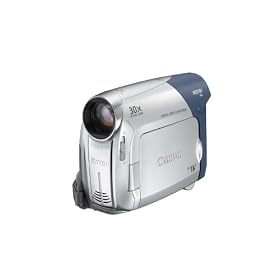
For filming we used a Canon digital video camcorder MD101. We inserted a DV tape to record our footage on. Before we recorded anything we ensured we rewound the tape to the beginning to ensure we didn't record over any other footage. Also before every shot we held a piece of white paper in front of the camera to ensure the tone was correct and the same. From using the camcorder on filming our rough ideas we discovered that it was more effective to move the camcorder than use the zoom on it. The picture was clearer for doing this, an example is when we used the zoom to shoot the wedding picture it was quite blurry so instead we moved the camcorder nearer to it. When filming we used the tri-pod as it gave us a steady base which meant the shots were less shaky. Due to this we had to re-shoot some shots as they had been done hand held and therefore were shaky. Uploading our footage was reasonably easy to do. All we had to do was attach the camcorder with a lead to the iMac. We then had to click import on iMovie06. Before we did this we had to ensure we had rewound the DV tape to the beginning.
When we were filming our rough idea the battery for the camcorder ran out so we had to use a mobile phone camera to shoot half of the rough idea which meant it was really poor quality. This reminded us to ensure the camcorder was fully charged before we took it to film our final piece.

Software

For constructing our final piece we used iMovie06. This program had it's advantages and disadvantages.

ADVANTAGES
The program allowed us to transform our film into black and white with ease. We were debating whether to have it in colour or black and white and this process helped us to compare easily to help us reach a conclusion. The program also allowed us to apply the fading into black transition. This was done by just choosing which clip we wanted to apply it too. It's also very easy to extract audio content from shots. For the voice over reading to letter we shot it being done but only wanted to audio content. All we had to do was use the 'extract audio' then apply it to the shot/s we wanted to. Using this program was effective for applying our copyright free non diagetic music. We downloaded the song then dragged it from itunes to our film and positioned it in the designated place. We could also turn down the volume from our shots so there was no sound over the non diagetic music.


DISADVANTAGES
The iMovie06 program didn't have to ability to change our film to a sepia affect, this would have been quite affective and might have worked better than black and white. Another issue is that you can't cut into the frame of a shot. In one our shots there were people in the conservatory in the mise-en-scene. The shot was done quite well and we would have liked to have use it but couldn't because of this issue. If this procedure had been available we could have used this shot but instead we had to discard of it.

Tuesday, 31 March 2009

Change of location

At first we were going to have the location named as where we shot it: Menston, Leeds. But we then realised that to a wider audience, such as the American market this wouldn't be reconisible so we have changed the location to London. We realised this from our case study Working Title who tend to stick to stereotypical English locations to appeal to a wider audience.

Synopsis


The Notebook meets Atonement...

Things to add to final peice

  • Titles at the beginning and end
  • New shot of letter
  • Location and date information over first panning shot at begining

Draft of final piece with music

Draft of final piece without music


Audience feedback:
Swap beginning zoom in to zoom out over

Hair ideas


Keira Knightley in The Edge Of Love

· Long curly hair
· Loose, natural looking
· Clipped to the side to show the actress’s face.
· Natural hair signifies that the actress is in a country at war and therefore cant afford to have it styled.


1940s Hair Styles
Modern take on 1940s hairstyle.

Final idea - Lost in Love & War

Lost in Love & War

Genre:
Romantic drama
Setting: England during World War II
Target audience: 16+
Rating: 12
Music: Throughout shots - sad, slow tempo
Location: In a cottage garden
Casting: Early twenties woman
Early twenties man
Garden must fit in with 40's setting

Starts with a black screen which has production logo and names. This has war type sound effects over. The sound effects then fade out and the slow non diagetic music begins. It then fades into a panning long shot of the garden with the woman at the end lay on a blanket reading. There is writing over this saying the date. There is then a front view of the woman lay reading, looking content and at rest. It then moves to a medium close up of the woman, she hears a noise in the distance then looks up and moves her head to face the camera. This then moves to a medium long shot of the woman standing up, in a state of shock, still facing the gate, she then drops the book and walks out of the shot. The scene switches to a medium shot of a man in army uniform stood at the gate, holding a letter and what looks like a notebook. This moves to a long shot of the woman walking towards the man, again in a sate of shock, this shot portrays what the man is seeing. There is then an over the shoulder shot of the woman walking again towards the man. This then fades into an extreme close up of the man and woman's hands exchanging the letter and notebook. There is another over the shoulder shot of the woman to show her emotions. This goes into a long shot of the woman walking back up the path to the doorstep. The woman is then seen from a medium shot sat on the doorstep staring at the letter. This fades into an over the shoulder shot of the woman opening the notebook and pulling out what looks to be a wedding photograph, she stares at it, then strokes it, then opens the envelope and pulls the letter out. It then moves to a tracking shot of the letter so the viewer can see what’s written. This is accompanied by a voice over reading the letter. The voice over is the woman In question in present time looking back on these events. The shot goes to an extreme close up of the woman’s face to show her emotions. It then moves to a long shot of the woman, still sat on the doorstep, she composes her self, stands, takes a deep breath then walks out of the shot.

The film would then go onto an elderly woman looking back on the events that happened after this.

Rough idea

Wednesday, 25 March 2009

Letter recieved by woman

For filming we used an original envelope from the 1940's sent from the war and we used a letter holder and a wedding picture that were taken to war by a soldier.

This is the letter we composed
Army Air Forces

Wednesday, 11 March 2009

Production Name


We have decided to name our production company 'Spotlighted'. We were originally going to name it Spotlight but discovered through research that there was all ready a company called this. Our next course of action will be to design a logo for our name.

We decided to use a city skylight with a spotlight across it with the name Spotlighted at the base of the spotlight.

We realize that this production logo doesn't match with a World War II theme but we see our company as one that would work in a wide variety of genres unlike Merchant Ivory who only produced costume dramas. So this logo would be acceptable.

Friday, 6 March 2009

Preliminary Task: Soulja to cry on

TASK: Continuity task involving filming and editing a character opening a door, crossing a room and sitting down in a chair opposite another character, with whom he/she then exchanges a couple of lines of dialogue. This task should demonstrate match on action, shot/reverse shot and the 180-degree rule.

Our target audience for this film is probably teenagers. The anchorage for this is the characters themselves and the location: a school. There is little dialogue as it adds to the effect. It also allows the dialogue that is spoken to be the centre of attention as it outlines the main plot. The text also gives anchorage for what the main character is about to do.

I learnt from this task that a range of camera angles have to be used to add affect. Also more care needs to be taken with filming as the camera footage is a bit shaky. The editing needs to be done so that shots run smoothly into eachother so the character is seen moving to a different location.

Thursday, 26 February 2009

The Holiday, the first 2mins analysis

Media, The Holiday height="500" width="450" > value="http://d.scribd.com/ScribdViewer.swf?document_id=14676758&access_key=key-ogd581tl3unixvu4nr2&page=1&version=1&viewMode=list">            
   Publish at Scribd or explore others:        

Tuesday, 24 February 2009

Ideas for main task...

Genre: Drama
Setting: England during World War II
Target audience: 35+ Women
Rating: 12
Sound: Exaggerated tear drop (diagetic)
Exaggerated swinging of the swing (diagetic)
Music: Throughout shots - sad, slow tempo
Location: In a cottage garden
Casting: Mid thirties woman
Mid thirties man
4-5 year old girl's voice
Mise-en-scene: A swing hanging from a tree
A garden bench
Garden must fit in with 40's setting

Starts with black screen with writing 'August 1943'
Fades into a shot of a man in an army uniform at a gate holding his hat in his hand and a letter in the other.
The screen then fades out to black and the title is shown.
The screen then fades into a close up of two hands - a letter being handed from the man in uniform to a woman with a wedding ring on.
The screen then fades out to black and then some of the actors/actresses names are shown. Fades into a mid-shot of a woman sat on a bench holding an envelope staring at it.
Fades out again to black with actor/actresses names.
Close up tracking shot of writing on a letter 'inform you that your husband was killed in action' with a tear dropping onto it - exaggerated diagetic noise then the ink running .
Again the screen will fade to black and more actor/actresses names shown.
The shot will then fade into a close up of the woman's face with tears falling down her face.
The shot will then switch to a long shot of the woman in question sat on the bench and then diagetic noise of a child shouting 'mummy'.
Close up of her wiping her tears then moving to a long shot again showing her taking a deep breathe and then her shouting 'I'm coming darling'

Coursework Task

Preliminary exercise: 
Continuity task involving filming and editing a character opening a door, crossing a room and sitting down in a chair opposite another character, with whom she/he then exchanges a couple of lines of dialogue. This task should demonstrate match on action, shot/reverse shot and 180-degree rule.

Main Task: 
The titles and the opening of a new fiction film, to last a maximum of two minutes.

All video and audio material must be original, produced by the candidate, with exception of music or audio effects from a copyright-free source.

THE DEADLINE FOR A COMPLETED PRODUCTION IS THURSDAY APRIL 2ND